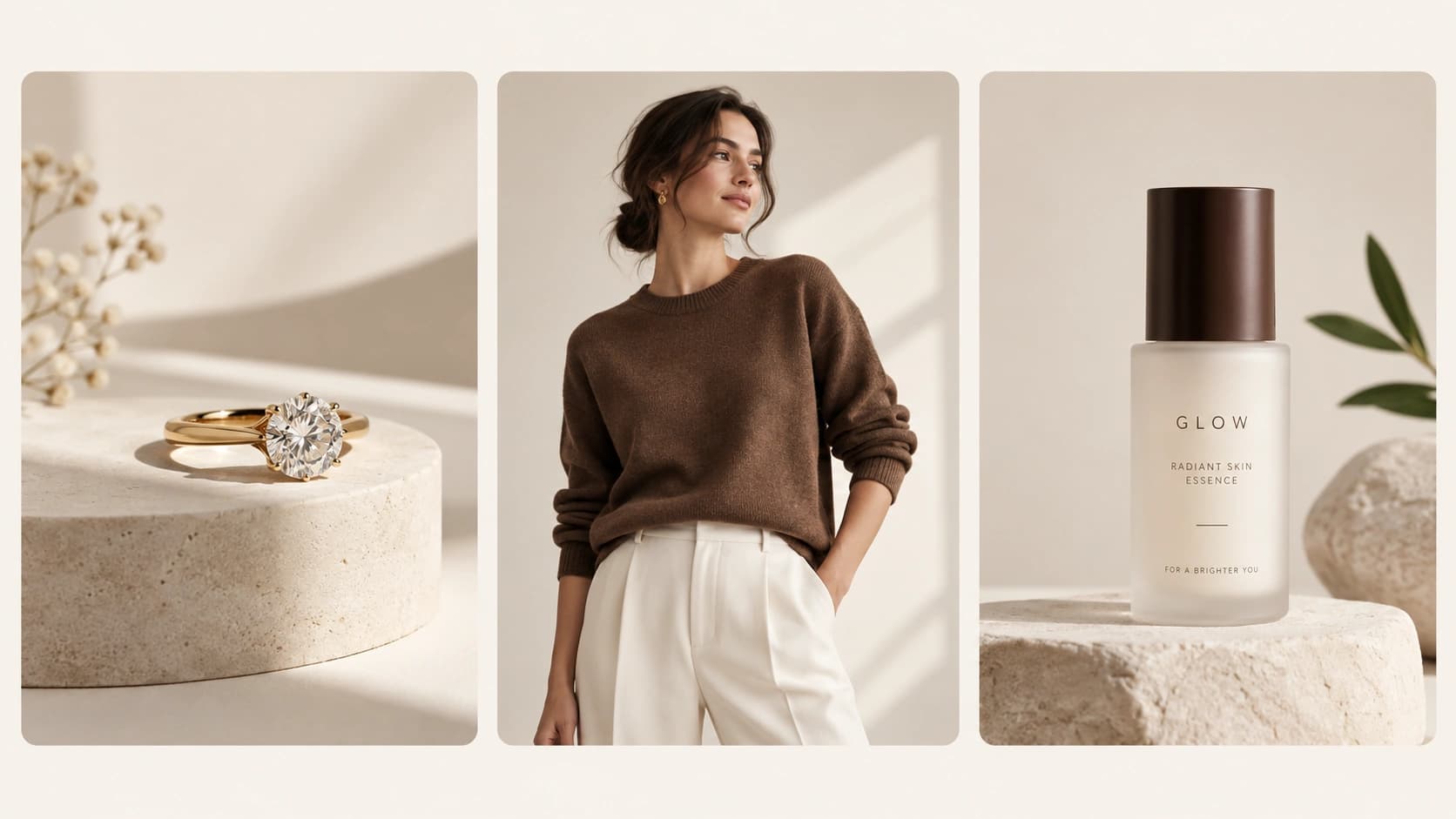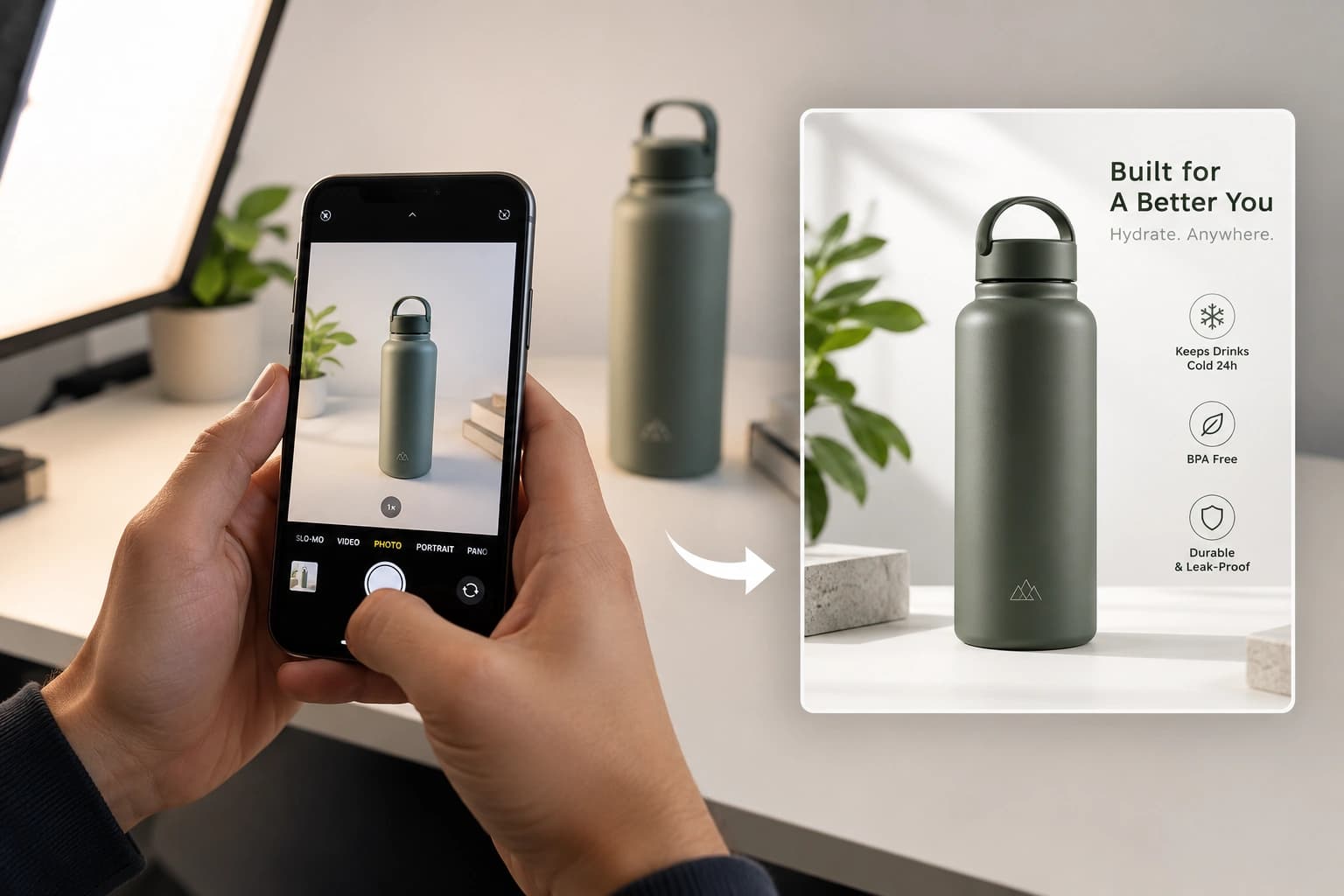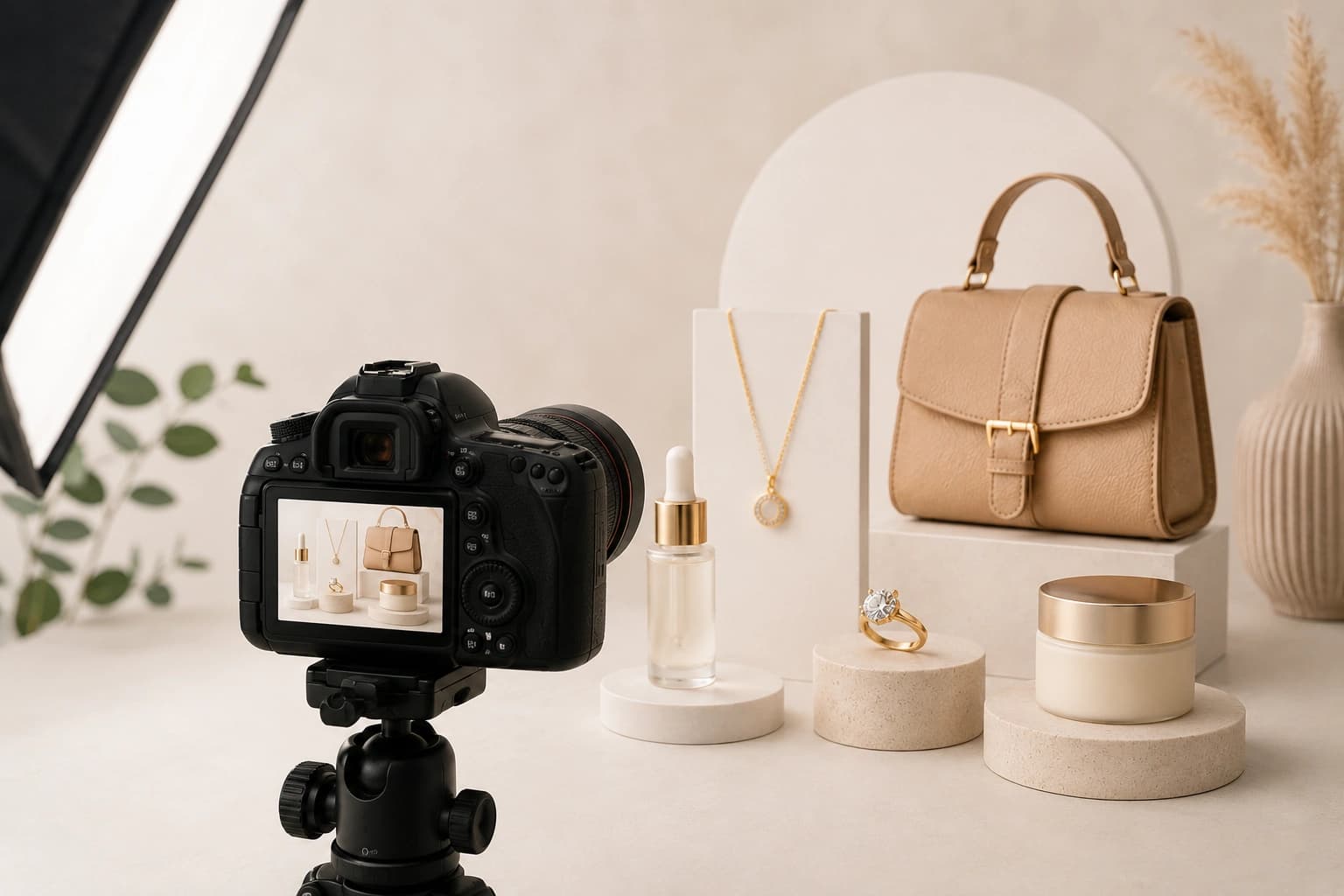
Most ecommerce brands underestimate product photography costs.
Not by a little.
By a lot.
What starts as:
“We just need a few product photos.”
quickly becomes:
- studio rentals
- photographers
- lighting setups
- creative direction
- props
- retouching
- revisions
- model fees
- lifestyle shoots
- ad creatives
- marketplace images
- social media content
And suddenly, a “simple shoot” becomes a multi-thousand-dollar production.
The problem is not just the cost itself.
It is that modern ecommerce brands no longer need one product image.
They need an entire visual system.
Especially in categories like:
- jewelry
- fashion
- beauty
- wellness
- accessories
where visuals directly influence perceived product value.
This is why product photography pricing has changed dramatically over the last few years — and why more ecommerce brands are now looking at AI ecommerce photography services as a scalable alternative.
In this guide, we’ll break down:
- the real product photography cost in 2026
- what brands are actually paying for
- hidden production expenses
- why lifestyle photography increases costs
- and how AI workflows are changing ecommerce content creation
The Real Problem With Product Photography
The biggest misconception about product photography is that brands think they are paying for “photos.”
They are not.
They are paying for:
- production
- coordination
- creative execution
- post-processing
- logistics
- content scalability
That difference matters.
Because once a brand grows beyond a few SKUs, photography stops being a one-time task and becomes an ongoing operational cost.
New arrivals. Seasonal campaigns. Marketplace listings. Paid ads. Social media creatives.
Every new product creates a new content requirement.
And every content requirement creates new production costs.
What Ecommerce Brands Actually Pay For
When brands search for product photography pricing, they usually expect a simple number.
But pricing rarely works that way.
Most professional product photography projects are built from multiple production layers.
Typical Product Photography Cost Breakdown
| Service | Average Cost Range |
|---|---|
| Basic Studio Product Photos | $20–$100 per image |
| Lifestyle Photography | $150–$500+ per image |
| Model Photography | $100–$1000+ per shoot |
| Creative Direction | $200–$2000 |
| Photo Retouching | $10–$50 per image |
| Studio Rental | $300–$1500/day |
| Props & Styling | $100–$1000+ |
| Ecommerce Listing Images | Custom pricing |
| Social Media Creatives | Additional cost |
| Ad Campaign Visuals | Additional cost |
And these costs scale fast.
A jewelry brand with 50 products may need:
- white background ecommerce images
- luxury lifestyle shots
- close-up detail photography
- social media content
- Meta ad creatives
- seasonal campaign visuals
That is not “a photoshoot.”
That is a content production pipeline.
Why Lifestyle Photography Costs So Much
Lifestyle photography is where costs usually explode.
Because lifestyle images require far more than just a camera.
A single lifestyle product photo may involve:
- location scouting
- set design
- lighting teams
- props
- stylists
- makeup artists
- models
- retouching
- creative planning
For beauty and fashion brands especially, lifestyle content becomes essential because customers do not just buy products.
They buy aspiration.
That is why hiring a lifestyle photographer is often significantly more expensive than standard ecommerce photography.
Lifestyle Photography vs Studio Photography Cost Breakdown
| Photography Style | What It Includes | Production Complexity | Typical Pricing |
|---|---|---|---|
| White Background Product Photography | Clean ecommerce listing images | Low | Lower Cost |
| Flat Lay Photography | Styled top-view product arrangements | Medium | Moderate Cost |
| Lifestyle Product Photography | Real-world product usage scenes | High | Expensive |
| Campaign Photography | Full creative brand shoots with direction | Very High | Premium Pricing |
| Model-Based Fashion Photography | Models, styling, makeup, and production | Very High | Premium Pricing |
The issue is not that brands dislike lifestyle photography.
The issue is that modern ecommerce brands need content constantly – for Amazon, Shopify, Meta ads, Instagram, email campaigns, and product launches.
And repeating traditional shoots every month becomes expensive very quickly.
Jewelry Photography Is More Expensive Than Most Brands Expect
Jewelry photography is one of the most technically difficult photography categories.
Tiny reflections.
Precise lighting.
Metal accuracy.
Stone clarity.
Even small mistakes can make expensive jewelry look cheap.
That is why jewellery product photography pricing is usually higher than standard ecommerce photography.
Jewelry Photography Usually Requires
- macro photography
- precision lighting
- advanced retouching
- reflection cleanup
- detailed editing
- close-up compositions
Luxury jewelry brands also require consistent visuals across:
- Amazon listings
- Shopify stores
- Meta ads
- email campaigns
- organic social content
And consistency itself becomes expensive.
Because maintaining the same visual language across hundreds of products traditionally requires ongoing production coordination.
Fashion Brands Face a Different Problem
Fashion photography is not just about products.
It is about emotion, identity, fit, and styling.
That is why clothing and fashion brands often spend heavily on:
- model photography
- campaign shoots
- seasonal lookbooks
- social media content
- ecommerce listings
- lifestyle campaigns
Fashion Photography Production Costs
| Fashion Content Type | Typical Cost |
| Ghost Mannequin Images | Moderate |
| Flat Lay Photography | Moderate |
| Model Photography | High |
| Outdoor Lifestyle Shoots | High |
| Campaign Shoots | Very High |
The challenge is that fashion brands cannot reuse the same visuals forever.
Trends change quickly.
Collections change quickly.
Platforms change quickly.
Which means brands need content continuously.
Beauty Brands Spend Heavily on Visual Trust
Beauty photography is less about showing products and more about creating trust.
Customers judge beauty products visually before reading descriptions.
Packaging.
Textures.
Ingredients.
Cleanliness.
Lighting.
Everything affects perceived quality.
That is why cosmetic product photography often includes:
- texture shots
- ingredient visuals
- premium lighting
- luxury compositions
- clean product styling
- lifestyle scenes
And because beauty brands rely heavily on paid ads and social media, content demand becomes massive very quickly.
One product might need:
- Amazon images
- website banners
- Instagram posts
- Meta ads
- TikTok creatives
- influencer visuals
- email campaign graphics
The content volume itself becomes expensive.
The Hidden Cost Most Brands Ignore
The biggest photography expense is usually not the shoot itself.
It is the lack of scalability.
Traditional production workflows struggle because every new creative request requires:
- new planning
- new coordination
- new editing
- new revisions
- new timelines
- new budgets
That becomes difficult when ecommerce brands need content weekly.
Especially across:
- marketplaces
- social media
- paid ads
- email campaigns
- websites
This is exactly why AI ecommerce photography services are growing so quickly.
Not because brands suddenly stopped caring about quality.
But because they need scalable content production.
Why More Ecommerce Brands Are Moving Toward AI Photography Workflows
Traditional photography still matters.
But ecommerce brands now need:
- faster turnaround
- lower production costs
- scalable workflows
- multi-platform creatives
- consistent branding
And this is where AI-powered workflows become useful.
Instead of organizing separate shoots for:
- Amazon
- Meta ads
- Shopify banners
- seasonal campaigns
brands can now generate multiple visual formats from a single product image.
How Monoshoot Fits Into Modern Ecommerce Photography
Most AI tools generate generic images.
That becomes a problem for ecommerce brands because marketplaces and product categories all have different visual requirements.
Monoshoot approaches this differently.
The platform is specifically designed for ecommerce product photography workflows.
Instead of one generic generator, Monoshoot supports category-specific image generation for:
- Jewellery & Accessories
- Wellness & Cosmetics
- Clothing & Fashion
That matters because each category requires different visual treatment.
A jewelry product needs luxury lighting and detail clarity.
A beauty product needs clean premium compositions.
A fashion product needs styling, mood, and fit visualization.
Monoshoot also allows brands to:
- generate ecommerce-ready product images
- create social media creatives
- generate ad visuals
- create model-based scenes
- use different aspect ratios
- maintain consistent brand colors
Which solves one of the biggest issues ecommerce brands face today:
content consistency across platforms.
Instead of rebuilding creative assets from scratch for every campaign, brands can scale visual production much faster.
And for many growing brands, reducing production bottlenecks matters just as much as reducing costs.
Traditional Photography vs AI Ecommerce Photography Services
Cost Comparison Table
| Workflow | Traditional Photography | AI Ecommerce Photography |
| Studio Rental | Required | Not required |
| Model Hiring | Often required | Optional |
| Retouching | Manual | Faster workflow |
| Turnaround Time | Days or weeks | Much faster |
| Ad Creative Variations | Expensive | Scalable |
| Social Media Content | Additional production | Easier generation |
| Marketplace Images | Separate workflows | Unified workflow |
| Cost Scalability | Difficult | More scalable |
AI does not completely replace traditional photography.
But it changes how brands approach content production.
Especially for ecommerce brands managing:
- large SKU counts
- frequent launches
- social campaigns
- marketplace listings
- performance marketing creatives
So… What Does Product Photography Actually Cost?
The answer depends on what a brand truly needs.
If you only need:
- a few white background photos
the cost stays relatively manageable.
But modern ecommerce brands usually need:
- listing images
- lifestyle content
- ad creatives
- social visuals
- model photography
- campaign assets
And once content production becomes continuous, photography becomes an operational system — not just a creative expense.
That is why many ecommerce brands today are combining:
- traditional photography
- AI-generated workflows
- scalable creative systems
to reduce costs while increasing production speed.
Final Thoughts
The real reason product photography costs more than most ecommerce brands expect is simple:
Modern brands do not just need photos anymore.
They need content ecosystems.
And for categories like jewelry, fashion, and beauty, visual content directly impacts:
- conversion rates
- perceived value
- ad performance
- customer trust
- brand identity
Traditional photography still has its place.
But as ecommerce content demand continues growing, scalable AI ecommerce photography services are becoming part of how modern brands operate.
Especially for brands that need to create:
- marketplace-ready images
- ad creatives
- social content
- lifestyle scenes
- branded visuals
without rebuilding production from scratch every single time.
FAQ
What affects product photography pricing the most?
The biggest factors affecting product photography pricing include:
number of products
lifestyle vs studio photography
model usage
retouching requirements
creative direction
location costs
content variations for ads and social media
Lifestyle and campaign shoots are usually the most expensive.
How much does product photography cost in 2026?
Product photography cost can range from $20 per image for simple white background photos to several thousand dollars for full lifestyle or campaign productions involving models, stylists, and creative direction.
Why does lifestyle photography cost more than standard product photography?
Lifestyle photography involves additional production elements such as locations, props, stylists, models, lighting setups, and creative planning. This makes it significantly more expensive than basic ecommerce product photography.
Is AI product photography cheaper than traditional photography?
AI ecommerce photography services are generally more scalable and cost-effective for brands that need frequent content production across marketplaces, ads, and social media. However, many brands still combine AI workflows with traditional photography.
Can AI-generated product images be used for ecommerce?
Yes. Many ecommerce brands now use AI-generated product images for:
Amazon listings
Shopify stores
social media
paid ads
email campaigns
lifestyle creatives
as long as the images accurately represent the product.
What types of brands benefit most from AI ecommerce photography services?
AI photography workflows are especially useful for:
jewelry brands
beauty brands
fashion brands
wellness brands
ecommerce businesses with large product catalogs
because they need continuous visual content production.
How does Monoshoot help ecommerce brands?
Monoshoot helps ecommerce brands generate:
marketplace-ready product images
social media creatives
ad visuals
model-based scenes
lifestyle photography
using category-specific AI workflows for Jewellery & Accessories, Wellness & Cosmetics, and Clothing & Fashion.
Does Monoshoot support different aspect ratios and brand colors?
Yes. Monoshoot allows brands to generate visuals in multiple aspect ratios while maintaining consistent brand colors and visual identity across platforms.
How many product images should ecommerce brands create per product?
Most ecommerce brands should create:
marketplace-ready images
close-up detail shots
lifestyle visuals
ad creatives
social media formats
mobile-friendly content
to improve conversion rates across different platforms.
Helpful Resources for Ecommerce Brands
If you want to learn more about ecommerce photography and marketplace image guidelines, these resources are helpful:
- Amazon Product Image Requirements
https://www.monoshoot.com/blog/amazon-product-photography-requirements-2026 - Shopify Product Photography Tips
https://www.shopify.com/blog/product-photography - Google SEO Starter Guide
https://developers.google.com/search/docs/fundamentals/seo-starter-guide - Amazon A+ Content Design Guide
https://sell.amazon.com/blog/a-plus-content-design-guide