Creating premium jewelry product images has always been one of the biggest challenges in ecommerce photography. Reflective metals, gemstones, tiny textures, fingerprints, and lighting inconsistencies make jewelry photography extremely difficult for most brands.
That is why more ecommerce businesses are now using AI-powered workflows to improve their visual content production.
This Master AI Jewelry Product Photography Guide explains how modern brands use artificial intelligence to create luxury-quality jewelry visuals faster, more consistently, and at lower cost. Whether you sell diamond rings, gold necklaces, silver bracelets, handmade jewelry, or luxury watches, AI jewelry product photography can dramatically improve your ecommerce visuals.
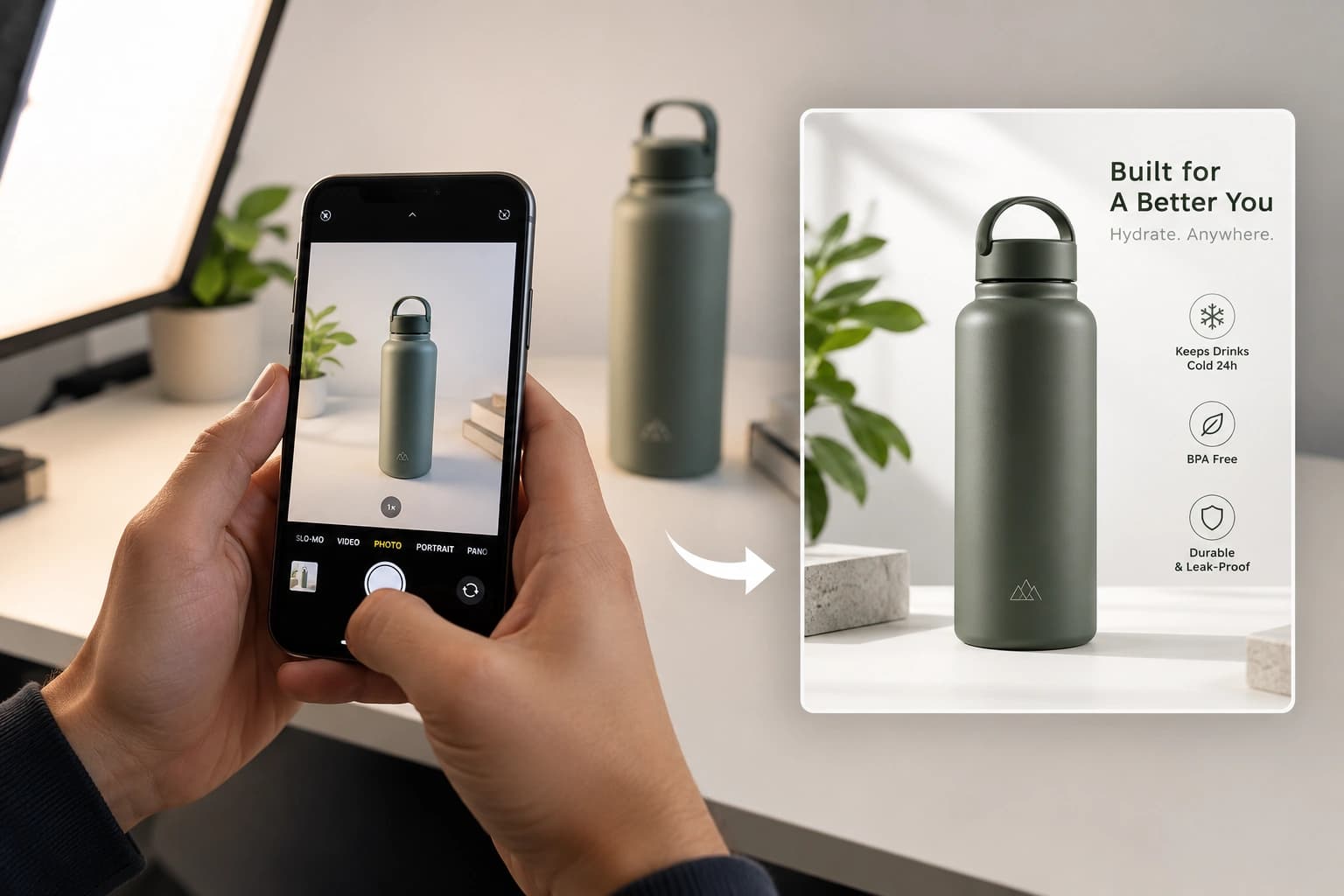
With platforms like Monoshoot, brands can transform simple phone-captured jewelry photos into studio-quality ecommerce images without expensive studio setups or complicated editing software.
In this Master AI Jewelry Product Photography Guide, you’ll learn:
- What AI jewelry product photography is
- Why jewelry photography is difficult
- Best lighting techniques
- How to capture better source images
- Best backgrounds for jewelry photography
- Common mistakes to avoid
- SEO tips for jewelry product images
- How Monoshoot helps jewelry brands scale faster
What Is AI Jewelry Product Photography?
AI jewelry product photography is the process of using artificial intelligence to enhance jewelry product images into professional ecommerce visuals.
Traditional jewelry photography often requires:
- Expensive studios
- Professional lighting
- Macro lenses
- Photoshop retouching
- Reflection control
- Advanced editing workflows
With AI jewelry product photography, brands can automate many parts of the workflow while still preserving the original jewelry product exactly as it is.
Modern AI jewelry product photography tools help create:
- Clean backgrounds
- Luxury lighting
- Realistic shadows
- Lifestyle scenes
- Marketplace-ready exports
- Social media creatives
This is why AI jewelry product photography is becoming the preferred workflow for modern ecommerce brands.
Why Jewelry Photography Is So Difficult
Jewelry photography is very different from normal product photography.
Jewelry contains:
- Reflective metallic surfaces
- Tiny gemstones
- Detailed textures
- Fine craftsmanship
These elements create several photography challenges.
| Challenge | Why It Happens |
|---|---|
| Harsh reflections | Metal surfaces reflect surrounding objects |
| Dust visibility | Macro photography reveals tiny particles |
| Gemstone glare | Incorrect lighting creates blown highlights |
| Color inconsistency | Gold and silver tones shift under poor lighting |
| Loss of detail | Bad focus reduces texture clarity |
Even expensive jewelry can look low-quality if the photography is poor.
This is why brands increasingly rely on AI jewelry product photography to maintain premium visual quality consistently.
Why Brands Are Switching to AI Jewelry Product Photography
Traditional jewelry photography is expensive and difficult to scale.
Professional shoots usually involve:
- Studio rentals
- Photographers
- Lighting setups
- Retouchers
- Editing software
- Designers
For growing ecommerce brands, this becomes expensive very quickly.
AI jewelry product photography changes the workflow completely.
| Traditional Workflow | AI Workflow with Monoshoot |
|---|---|
| Expensive studio shoots | Simple phone photos |
| Manual Photoshop editing | AI automated |
| Difficult consistency | Brand presets |
| Slow production process | Faster workflows |
| Manual resizing | Multi-platform exports |
| Separate ad creative production | Instant AI variations |
The biggest advantage of AI jewelry product photography is that brands can create more content faster while maintaining premium visual consistency.
Benefits of AI Jewelry Product Photography
Faster Content Production
Modern ecommerce brands need:
- Product images
- Social media posts
- Ad creatives
- Campaign visuals
- Marketplace listings
- Lifestyle scenes
Traditional workflows take days or weeks.
AI jewelry product photography helps brands create professional visuals within minutes.
Lower Production Costs
Traditional jewelry shoots often require expensive equipment and editing services.
AI jewelry product photography significantly reduces:
- Studio costs
- Retouching expenses
- Photography costs
- Design work
This makes premium-quality photography more accessible for smaller ecommerce brands.
Better Visual Consistency
Consistency is critical for ecommerce branding.
When product images use:
- Different lighting
- Different shadows
- Different editing styles
- Different backgrounds
the brand feels less professional.
AI jewelry product photography helps maintain:
- Consistent lighting
- Uniform backgrounds
- Similar framing
- Unified visual aesthetics
Easier Marketplace Optimization
Different ecommerce platforms require different image styles.
| Platform | Recommended Style |
|---|---|
| Shopify | Premium lifestyle visuals |
| Amazon | White background images |
| Etsy | Handmade editorial style |
| Fashion-focused creatives | |
| Vertical lifestyle visuals |
With Monoshoot, brands can create platform-ready exports from a single source image.
Best Setup for AI Jewelry Product Photography
One of the biggest misconceptions about jewelry photography is that expensive equipment is required.
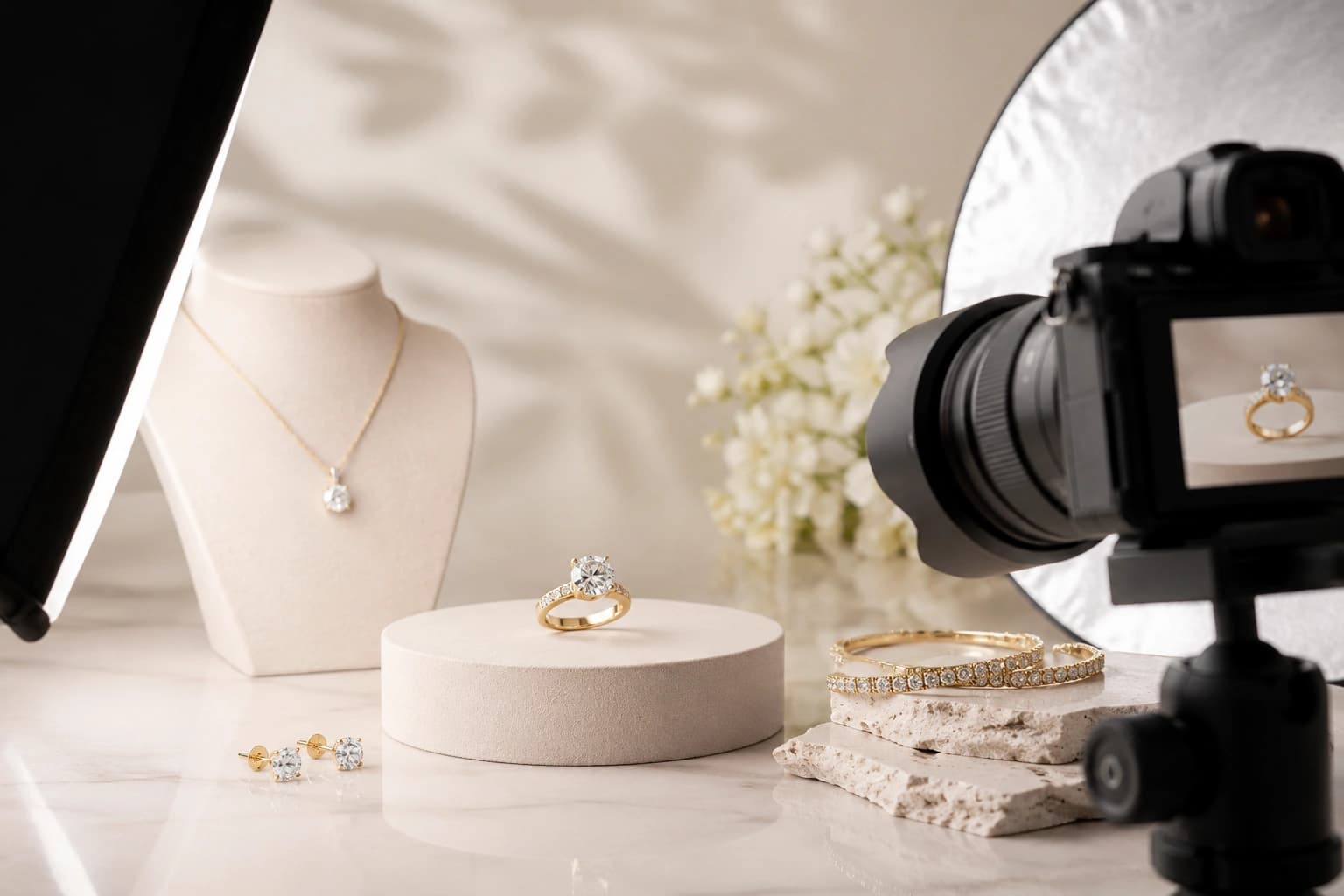
In reality, a simple setup works very well when combined with AI jewelry product photography workflows.
| Element | Recommended Setup |
|---|---|
| Camera | Smartphone or DSLR |
| Lighting | Soft natural light |
| Background | White or beige neutral surface |
| Stabilization | Flat surface or tripod |
| Editing Workflow | AI enhancement using Monoshoot |
The cleaner the original image, the better the final AI jewelry product photography results will look.
Best Lighting for Jewelry Photography
Lighting is the most important part of jewelry product photography.
Good lighting helps preserve:
- Metal texture
- Gemstone sparkle
- Product depth
- Realistic reflections
Bad lighting creates:
- Harsh glare
- Flat textures
- Overexposed highlights
- Color inconsistencies
Use Soft Natural Light
Soft directional light works best for AI jewelry product photography.
The easiest setup:
- Place the jewelry near a window
- Use indirect daylight
- Avoid direct sunlight
This creates softer shadows and more premium reflections.
Avoid Harsh Flash
Direct flash creates:
- Strong reflections
- Hotspots
- Unnatural highlights
- Cheap-looking visuals
Soft lighting always produces better ecommerce jewelry images.
Best Backgrounds for Jewelry Photography
Simple backgrounds help customers focus directly on the jewelry product.
Best background choices:
- White
- Beige
- Soft gray
- Matte neutral surfaces
- Stone textures
Avoid:
- Busy patterns
- Strong colors
- Distracting objects
Minimal backgrounds improve both ecommerce presentation and AI jewelry product photography quality.
Best Styles for AI Jewelry Product Photography
Different styles work for different branding goals and platforms.
Minimal Studio Style
This is the most common AI jewelry product photography style.
Best for:
- Shopify stores
- Product catalogs
- Amazon listings
Features:
- Clean backgrounds
- Soft shadows
- High product clarity
- Luxury presentation
Minimal studio visuals help customers focus entirely on the jewelry product.
Editorial Jewelry Photography
Editorial visuals feel more premium and fashion-oriented.
Best for:
- Luxury branding
- Fashion campaigns
- Instagram ads
- Homepage banners
Features:
- Dramatic lighting
- Cinematic shadows
- Premium compositions
- Fashion styling
Editorial AI jewelry product photography helps brands build stronger visual identity.
Lifestyle Jewelry Photography
Lifestyle visuals help customers emotionally connect with products.
Examples include:
- Rings worn naturally
- Bracelets in outdoor scenes
- Necklaces paired with outfits
Lifestyle photography works especially well for:
- Handmade jewelry brands
- DTC ecommerce stores
- Social media campaigns
With Monoshoot, brands can create luxury lifestyle scenes while preserving the original jewelry product exactly as it is.
How AI Improves Jewelry Product Images
AI jewelry product photography tools improve visuals in several ways.
Background Cleanup
Removing backgrounds manually in Photoshop takes time.
AI can automatically:
- Remove backgrounds
- Replace backgrounds
- Generate luxury surfaces
- Create cleaner compositions
This dramatically improves workflow efficiency.
Shadow Generation
Realistic shadows create:
- Depth
- Premium presentation
- Better realism
AI-generated shadows help jewelry products feel naturally placed within scenes.
Reflection Balancing
Jewelry photography often suffers from excessive reflections.
AI jewelry product photography helps:
- Reduce glare
- Balance highlights
- Improve texture visibility
- Maintain realistic shine
This creates cleaner and more professional ecommerce visuals.
Lifestyle Scene Generation
AI tools can generate:
- Editorial environments
- Luxury scenes
- Social media compositions
- Minimal studio setups
without changing the jewelry itself.
This helps brands create multiple content variations quickly.
How Monoshoot Helps Jewelry Brands
Monoshoot is designed specifically for AI jewelry product photography workflows.
Unlike generic AI image generators, Monoshoot focuses on preserving the actual jewelry product while upgrading the presentation into studio-quality ecommerce visuals.
Jewelry brands use Monoshoot for:
| Use Case | Benefit |
|---|---|
| Ecommerce Images | Premium product presentation |
| Marketplace Listings | Ready-to-upload exports |
| Social Media Creatives | Faster content production |
| Lifestyle Scenes | Luxury editorial visuals |
| Multiple Aspect Ratios | Cross-platform publishing |
| Brand Consistency | Unified catalog aesthetics |
This makes AI jewelry product photography more scalable for modern ecommerce brands.
Common Jewelry Photography Mistakes
Many jewelry brands make small mistakes that reduce image quality significantly.
Harsh Lighting
Harsh lighting creates:
- Bad reflections
- Unnatural highlights
- Loss of detail
Soft lighting always produces better AI jewelry product photography results.
Overediting
Overedited jewelry images often look fake.
Avoid:
- Excessive sharpening
- Unrealistic sparkle
- Oversaturated gemstones
- Artificial reflections
Luxury visuals should still feel realistic.
Busy Backgrounds
Complex backgrounds distract attention from the jewelry product.
Minimal compositions usually perform better for AI jewelry product photography.
Inconsistent Styling
Inconsistent:
- Lighting
- Framing
- Color grading
- Backgrounds
make ecommerce brands feel less professional.
Consistency is extremely important for customer trust.
SEO Tips for Jewelry Product Images
Optimized product images improve:
- Search rankings
- Page speed
- Ecommerce conversions
Use Descriptive File Names
Examples:
- diamond-ring.jpg
- gold-necklace.jpg
- silver-bracelet.jpg
Avoid generic filenames like:
- IMG_2048.jpg
Add Optimized Alt Text
Good alt text helps search engines understand images.
Describe:
- Product type
- Material
- Gemstone
- Color
Example:
“Rose gold necklace with diamond pendant.”
Compress Images Properly
Large images slow websites down.
Use:
- WebP
- Optimized JPEG
- Responsive image sizes
Fast-loading websites improve ecommerce SEO performance.
Use High-Resolution Images
Blurry jewelry images reduce customer trust immediately.
Customers want to see:
- Texture
- Gemstone clarity
- Metal finish
- Craftsmanship details
High-resolution visuals improve conversions significantly.
Future of AI Jewelry Product Photography
AI jewelry product photography is evolving rapidly.
Brands now create:
- Luxury product visuals
- Ad creatives
- Marketplace exports
- Social media campaigns
- Lifestyle photography
from simple phone-captured photos.
As AI continues improving, ecommerce brands will spend less time on production and more time on branding and growth.
Final Thoughts
This Master AI Jewelry Product Photography Guide shows how AI is transforming ecommerce photography for modern jewelry brands.
Instead of relying on expensive studios and complicated editing workflows, brands can now create premium jewelry product images using AI-powered tools like Monoshoot.
For ecommerce businesses, AI jewelry product photography offers:
- Faster workflows
- Better consistency
- Lower production costs
- Scalable content creation
- Luxury-quality ecommerce visuals
As competition in ecommerce continues growing, high-quality visual presentation is becoming more important than ever.
Brands that invest in AI jewelry product photography will have a major advantage in improving conversions, building trust, and creating a premium brand identity online.
FAQs About AI Jewelry Product Photography
What is AI jewelry product photography?
AI jewelry product photography uses artificial intelligence to enhance jewelry images into professional ecommerce visuals.
Can AI improve jewelry product images?
Yes. AI jewelry product photography can improve lighting, shadows, reflections, and backgrounds while preserving the original jewelry product.
Do I need a professional camera for jewelry photography?
No. Modern smartphones combined with AI jewelry product photography tools like Monoshoot can create professional-quality ecommerce visuals.
Which background is best for jewelry photography?
Neutral backgrounds like white, beige, and soft gray work best for AI jewelry product photography.
Is AI jewelry product photography good for Shopify stores?
Yes. AI jewelry product photography helps Shopify brands create premium visuals, lifestyle scenes, and marketplace-ready images faster.
References
- Google Search Central – Image SEO Best Practices
- Shopify Blog – Product Photography Tips for Ecommerce
- Etsy Seller Handbook – Product Photography Tips
- Adobe – Jewelry Photography Tips
- Amazon Seller Central – Product Image Requirements
- Monoshoot – AI Product Photography Platform
- Google PageSpeed Insights – Image Optimization Guidelines
- Moz — Beginner’s Guide to SEO
- HubSpot — Ecommerce Image Optimization Guide
- Ahrefs — Ecommerce SEO Best Practices