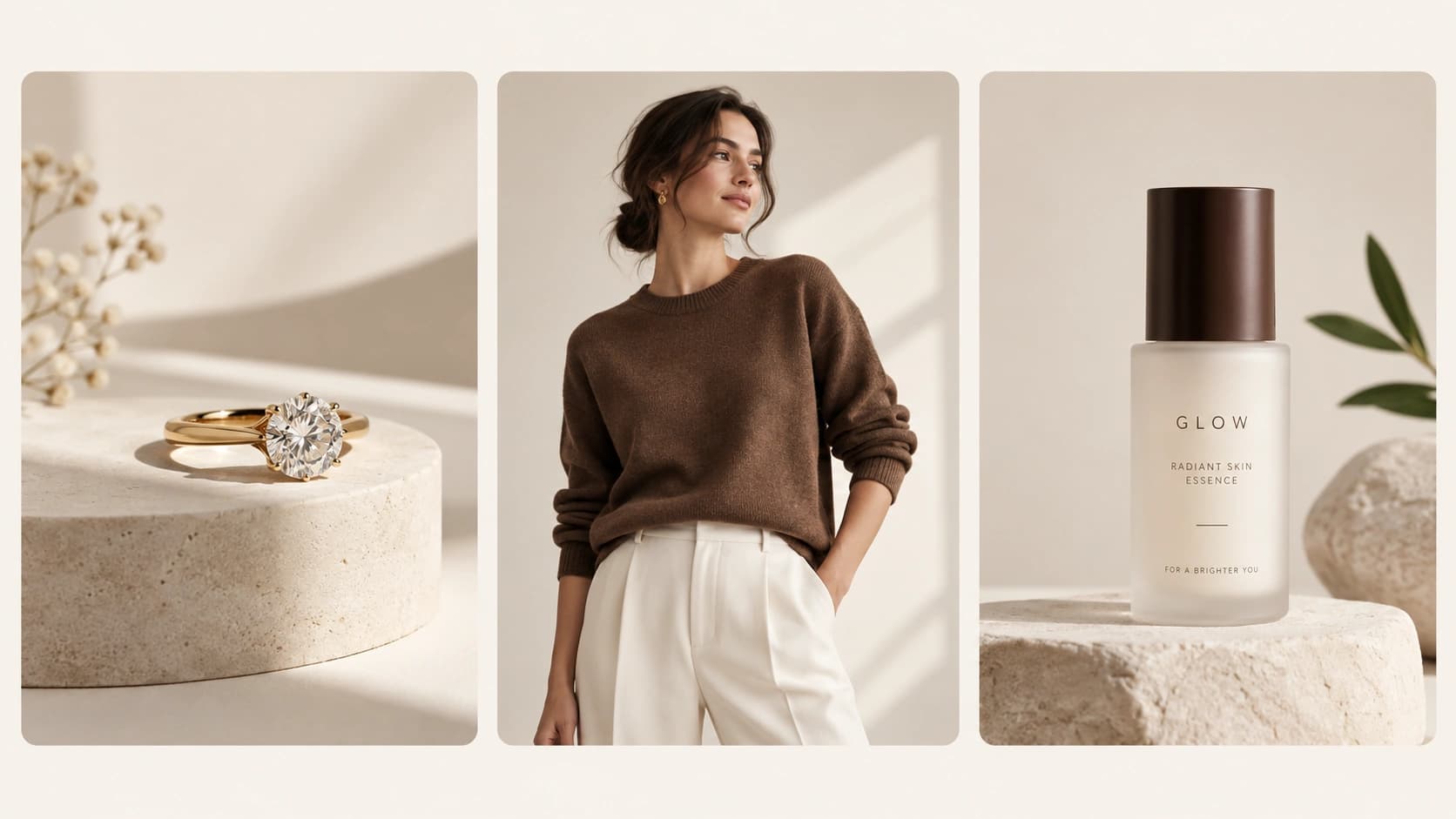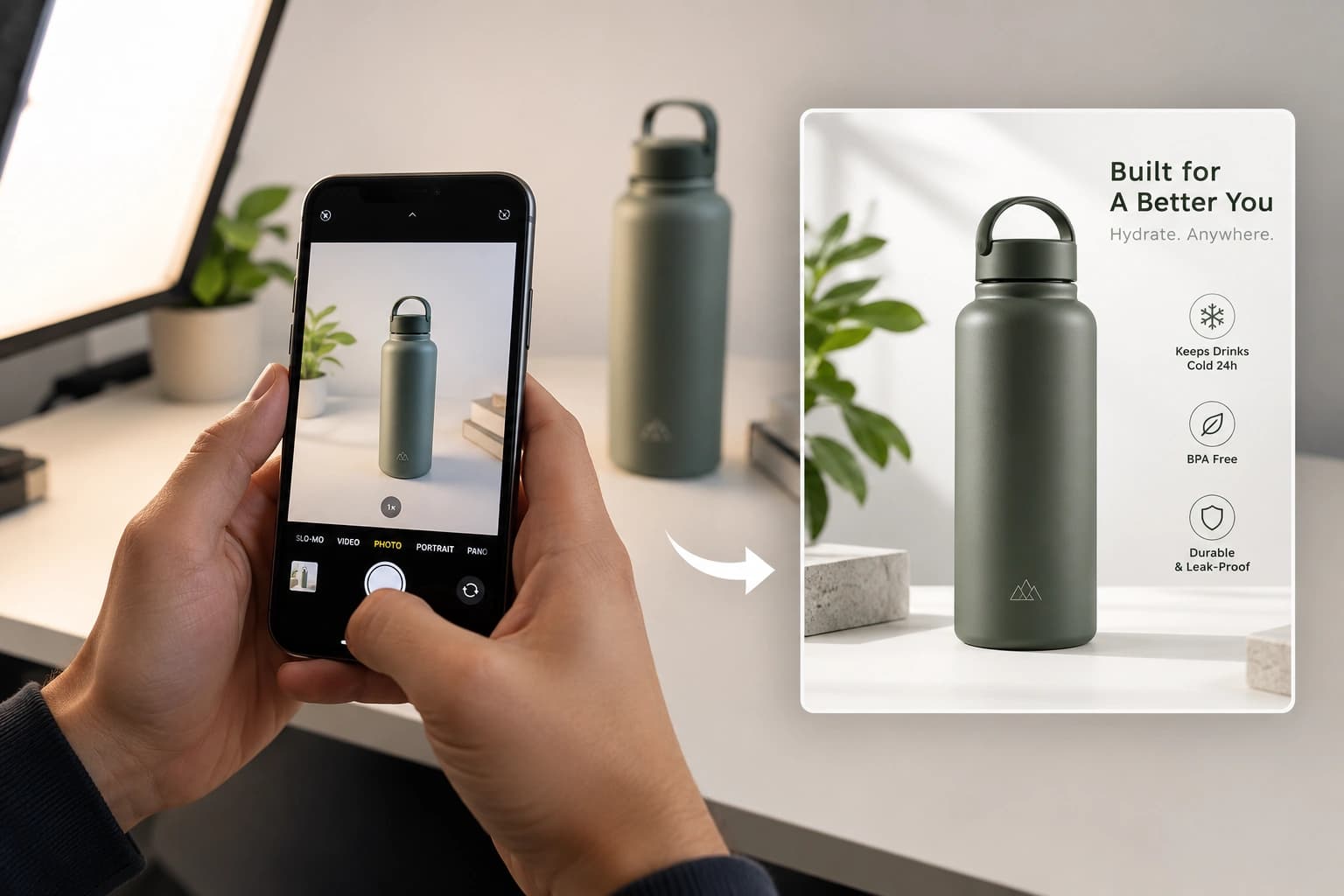
AI product photography is changing ecommerce. Brands can now create studio-quality product images, lifestyle scenes, and marketing creatives in minutes instead of organizing expensive photoshoots.
But as AI-generated visuals become more common, many ecommerce sellers are asking an important question:
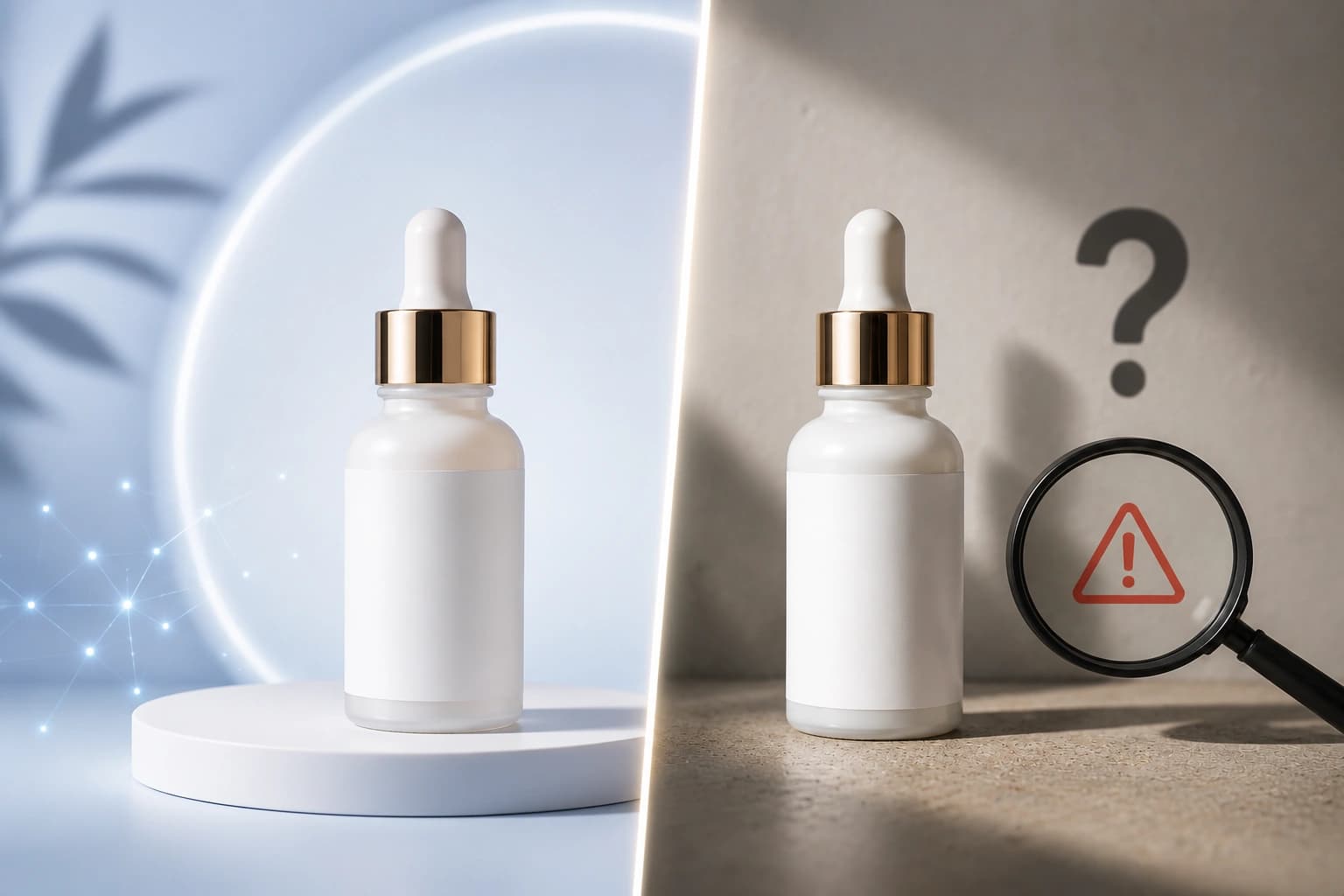
Can AI product photos get you flagged for false advertising?
The short answer is: Yes, they can.
However, using AI product photos does not automatically violate advertising laws. The problem occurs when AI-generated images misrepresent the actual product that customers receive.
Understanding where the line exists is essential for every ecommerce brand.
What Is False Advertising?
False advertising happens when marketing materials mislead consumers about a product’s characteristics, features, quality, or appearance.
Examples include:
- Showing features that do not exist
- Changing the product’s size or dimensions
- Misrepresenting colors
- Editing materials or textures
- Advertising accessories that are not included
- Creating unrealistic expectations
In ecommerce, product images play a major role in purchasing decisions. If your images significantly differ from the actual product, customers may feel deceived.
Why AI Product Photos Raise Concerns
AI product photography tools can generate highly realistic images.
This creates tremendous opportunities for brands, but it also creates risks.
AI can:
- Generate new backgrounds
- Add lifestyle environments
- Improve lighting
- Create advertising creatives
- Produce multiple image variations
Problems arise when AI begins changing the product itself.
For example:
| Acceptable | Risky |
|---|---|
| Better lighting | Changing gemstone colors |
| New backgrounds | Altering product materials |
| Lifestyle scenes | Adding features that don’t exist |
| Realistic shadows | Changing product shape |
| Cleaner presentation | Modifying size or dimensions |
The difference may seem small, but legally it can be significant.
When AI Product Photos Become Misleading
Most false advertising concerns fall into three categories.
The Product Looks Different
A customer purchases a silver necklace because the images show a polished, mirror-like finish.
The delivered product has a matte finish.
Even if the difference happened unintentionally during AI editing, the customer may feel misled.
Features Are Added That Do Not Exist
An AI tool accidentally generates:
- Extra gemstones
- Additional engravings
- Decorative elements
- Different clasps
- More detailed textures
These changes can create inaccurate expectations.
The Product Appears Higher Quality Than Reality
Excessive editing may:
- Remove manufacturing imperfections
- Add unrealistic sparkle
- Create luxury textures
- Over-enhance materials
The result may not match the actual product experience.
Can You Use AI Product Photos Safely?
Absolutely.
The safest approach is to use AI to improve presentation while preserving the actual product.
This means using AI for:
- Studio backgrounds
- Lighting improvements
- Natural shadows
- Lifestyle environments
- Image resizing
- Social media creatives
The product itself should remain unchanged.
Why Product Preservation Matters
Customers buy based on what they see.
Trust is difficult to build and easy to lose.
When product images accurately represent the item:
- Returns decrease
- Customer satisfaction improves
- Reviews become stronger
- Brand trust increases
Good product photography should make products look their best without making them look different.
Best Practices for AI Product Photography
Preserve the Original Product
Never use AI to:
- Change colors
- Modify materials
- Add details
- Remove features
- Alter dimensions
Presentation can change.
The product should not.
Use Multiple Product Angles
Showing:
- Front views
- Side views
- Close-up details
helps customers understand the product better and reduces confusion.
Include Accurate Product Descriptions
Images and descriptions should support each other.
If the product contains:
- Handmade variations
- Natural stones
- Slight color differences
communicate those details clearly.
Avoid Overediting
Overly perfect product images often create unrealistic expectations.
Luxury visuals should still feel believable.
Realistic product presentation usually performs better in the long run than highly manipulated images.
How Monoshoot Approaches AI Product Photography
At Monoshoot, our philosophy is simple:
AI should improve presentation, not change the product.
Monoshoot is designed to:
- Preserve the original product
- Generate professional backgrounds
- Create realistic lighting
- Produce lifestyle scenes
- Build social media creatives
- Export marketplace-ready images
The goal is to create studio-quality visuals while keeping the actual product accurate.
This approach helps brands scale content creation without compromising customer trust.
Why Authenticity Matters More Than Ever
Modern shoppers are increasingly aware of AI-generated content.
They care about:
- Accuracy
- Transparency
- Realistic expectations
- Product authenticity
Brands that use AI responsibly can benefit from:
- Higher trust
- Lower return rates
- Better reviews
- Stronger customer loyalty
AI is a powerful tool, but trust remains the foundation of ecommerce.
Final Thoughts
Can AI product photos get you flagged for false advertising?
Yes – if the images materially misrepresent the product that customers receive.
But AI product photography itself is not the problem.
The risk comes from altering the product rather than improving its presentation.
Used responsibly, AI can help brands create beautiful, professional product images while remaining truthful and transparent.
The best AI product photography makes products look their best without changing what they actually are.
That balance between creativity and accuracy is what builds long-term customer trust and sustainable ecommerce growth.